
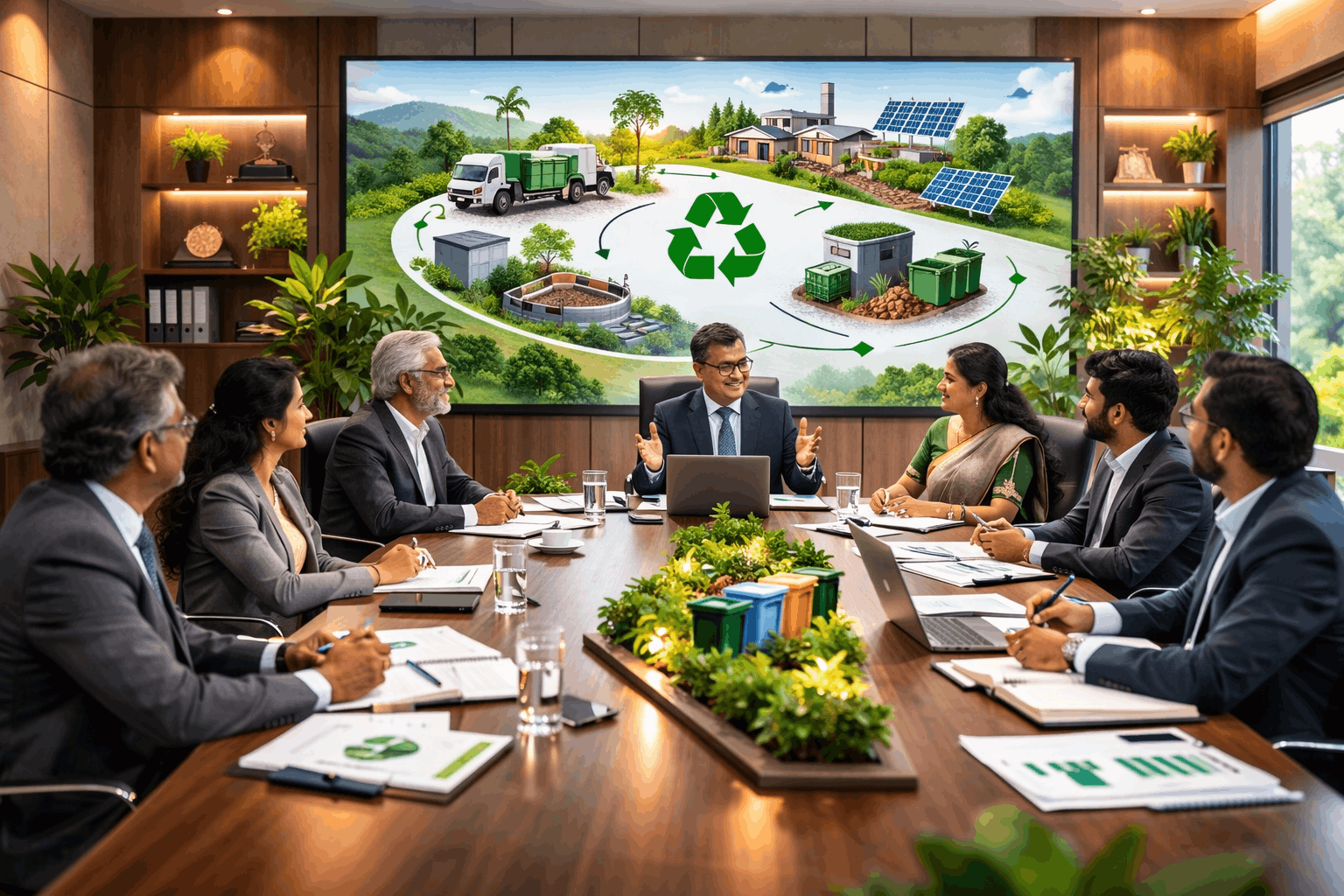
In a major step toward environmental sustainability, the Board of Directors of Rehabilitation Plantations Ltd (RPL) has unanimously approved a comprehensive, eco-friendly Waste Management Initiative to be rolled out across all company estates and factory complexes.
Aligning strictly with the stringent environmental protocols of our ISO 14001 certification, this new framework aims to completely modernize how waste is handled in our plantations and labor colonies. The initiative introduces a highly systematized waste control system with a special, uncompromising emphasis on eliminating plastic littering, thereby protecting the delicate ecological balance of the Pathanapuram Taluk and the adjacent Kallada River ecosystem.
Initiative Highlights
- Source Segregation: Mandatory separation of biodegradable and non-biodegradable waste at both work sites and residential labor lines.
- Centralized Waste Yards: Upgradation of central waste storage facilities for the systematic, safe, and hygienic disposal of collected materials.
- Bio-Composting: Conversion of organic agricultural waste into nutrient-rich compost to be reused as natural fertilizer for the rubber estates.
Moving Towards a Circular Economy
This initiative isn't just about waste disposal; it is about resource recovery. By ensuring that organic waste from the estates is naturally composted, RPL aims to reduce its reliance on external chemical fertilizers. Furthermore, strict protocols are being set for the safe disposal of factory effluents and packaging materials like empty latex barrels and LDPE films, ensuring zero ground-level contamination.
"Our operations are nestled in some of the most scenic and environmentally sensitive regions of Kerala. It is our corporate and moral duty to ensure that our footprint leaves the soil, air, and water pristine for future generations. This initiative firmly cements our pledge to sustainable plantation management."
Board of Directors, RPL
Community Education & Participation
A project of this scale requires the active participation of the entire RPL family. To facilitate this, the company will conduct a series of awareness campaigns across the labor colonies. Local health and sanitation workers will educate the repatriate families on household waste segregation, transforming this corporate directive into a deeply ingrained community habit.